Did you know that even with the same cinnamon variety, quality can differ significantly from region to region?
This article will guide you through 3 simple ways to identify high-quality cinnamon based on its bark color, essential oil content, and flavor profile. This will help you select the ideal, high-quality product for your import needs.
1. Introduction
Cinnamon is a prized spice, yet not all cinnamon is created equal. Even from the same plant variety, cinnamon grown in different regions like Van Yen (Yen Bai), Tra My (Quang Nam), or Yen Minh (Ha Giang) can yield vastly different qualities. This distinction stems from the unique climates, soil conditions, and cultivation methods of each area. You might even be surprised to learn that within Van Yen district itself, the quality of cinnamon can vary significantly from one commune to another.
Without knowing how to differentiate, you risk purchasing low-quality cinnamon with little essential oil, or even adulterated products.
This article will outline 3 clear signs to help you easily identify truly good quality cinnamon.
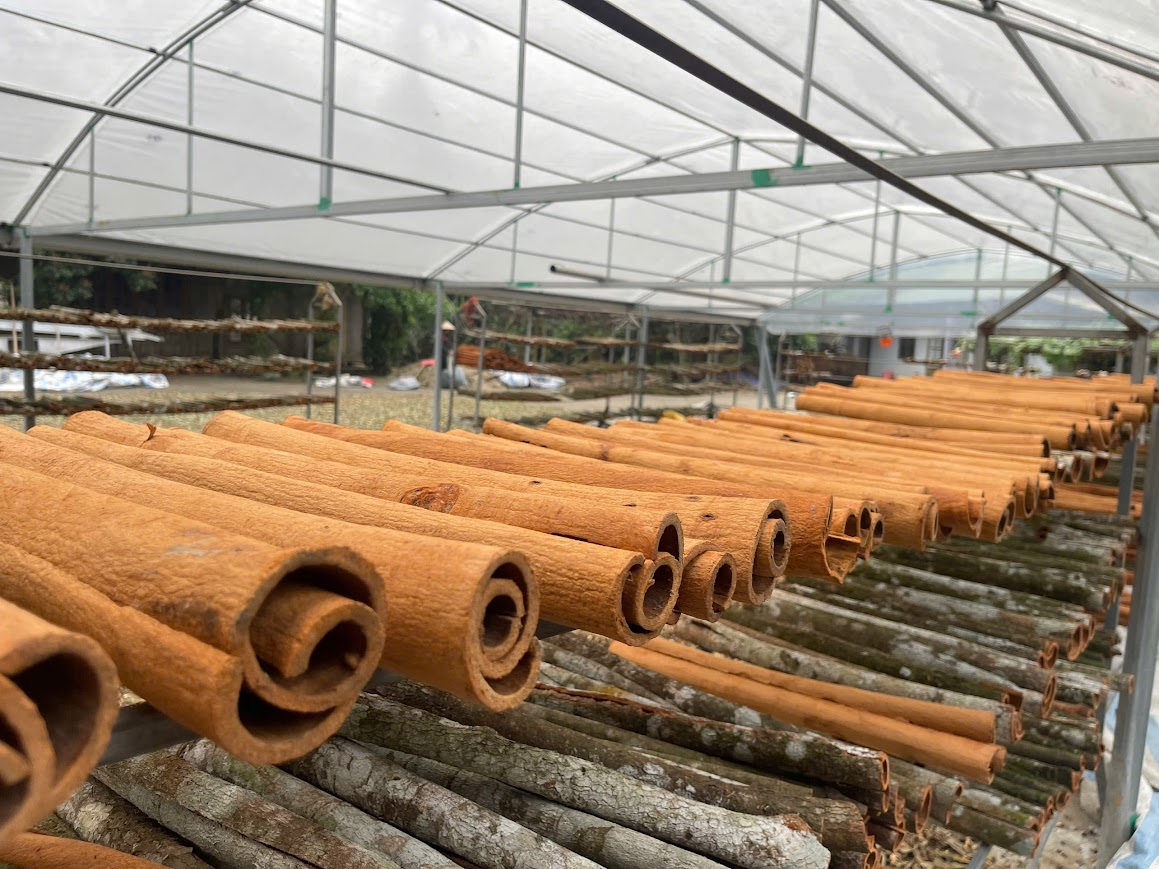
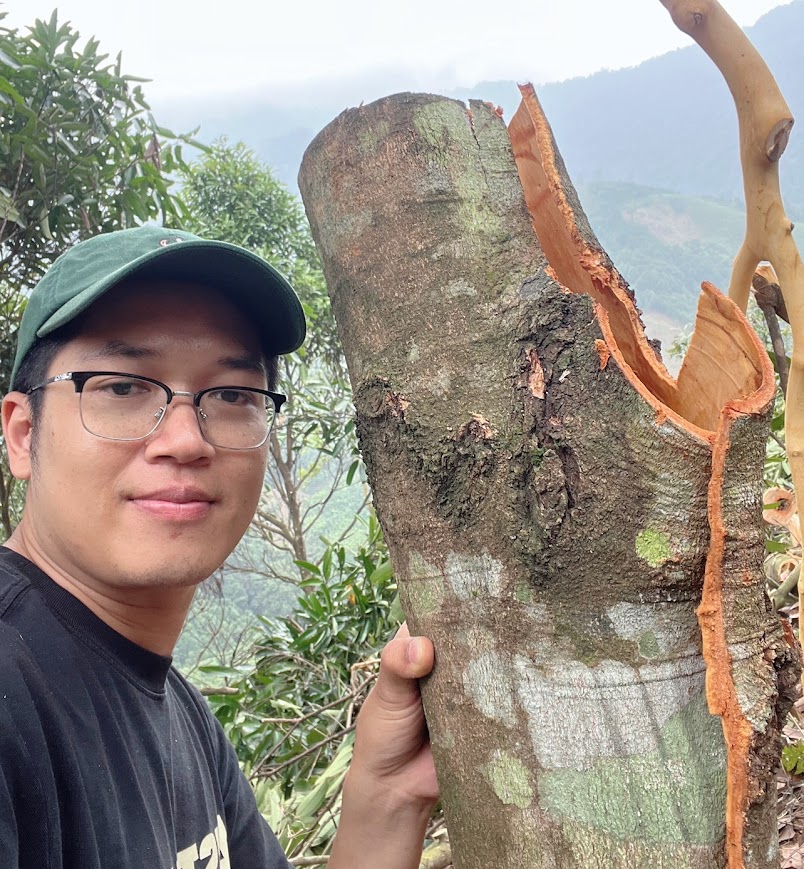
2. Sign 1: Fresh Cinnamon Bark Color – High quality cinnamon bark will have a darker inner surface with visible essential oil veins
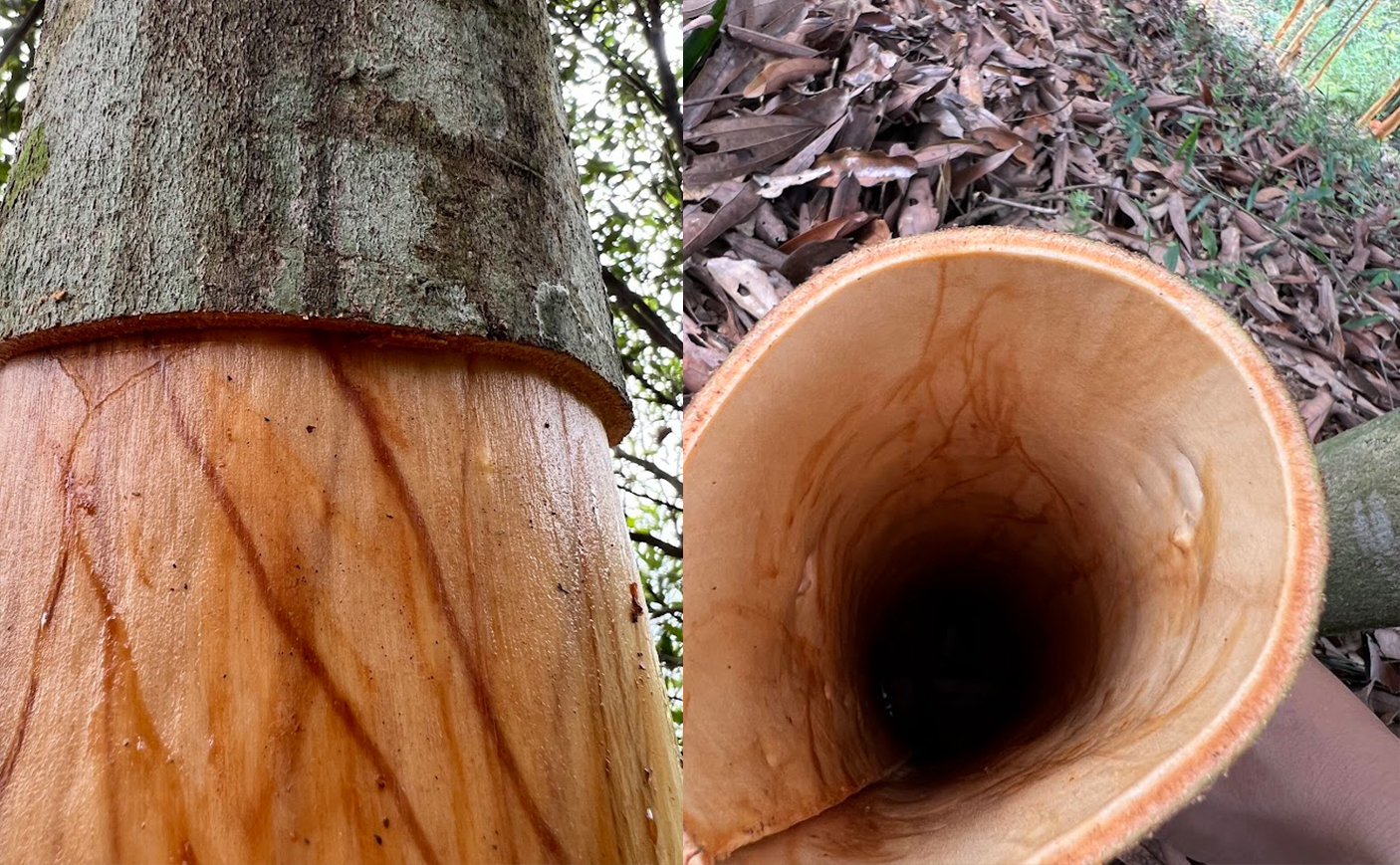
✅ High-Quality Cinnamon (e.g., Cinnamon from Xuan Tam Commune, Van Yen District)
-
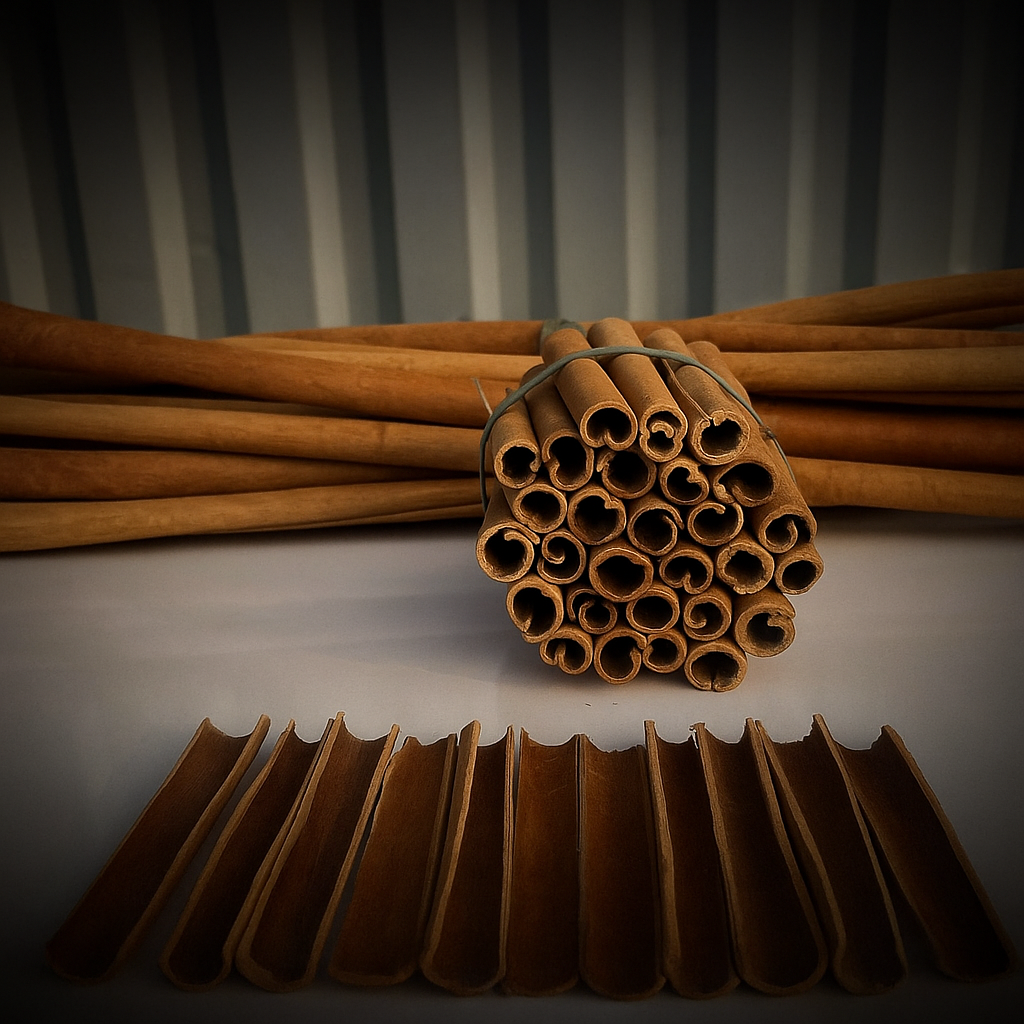
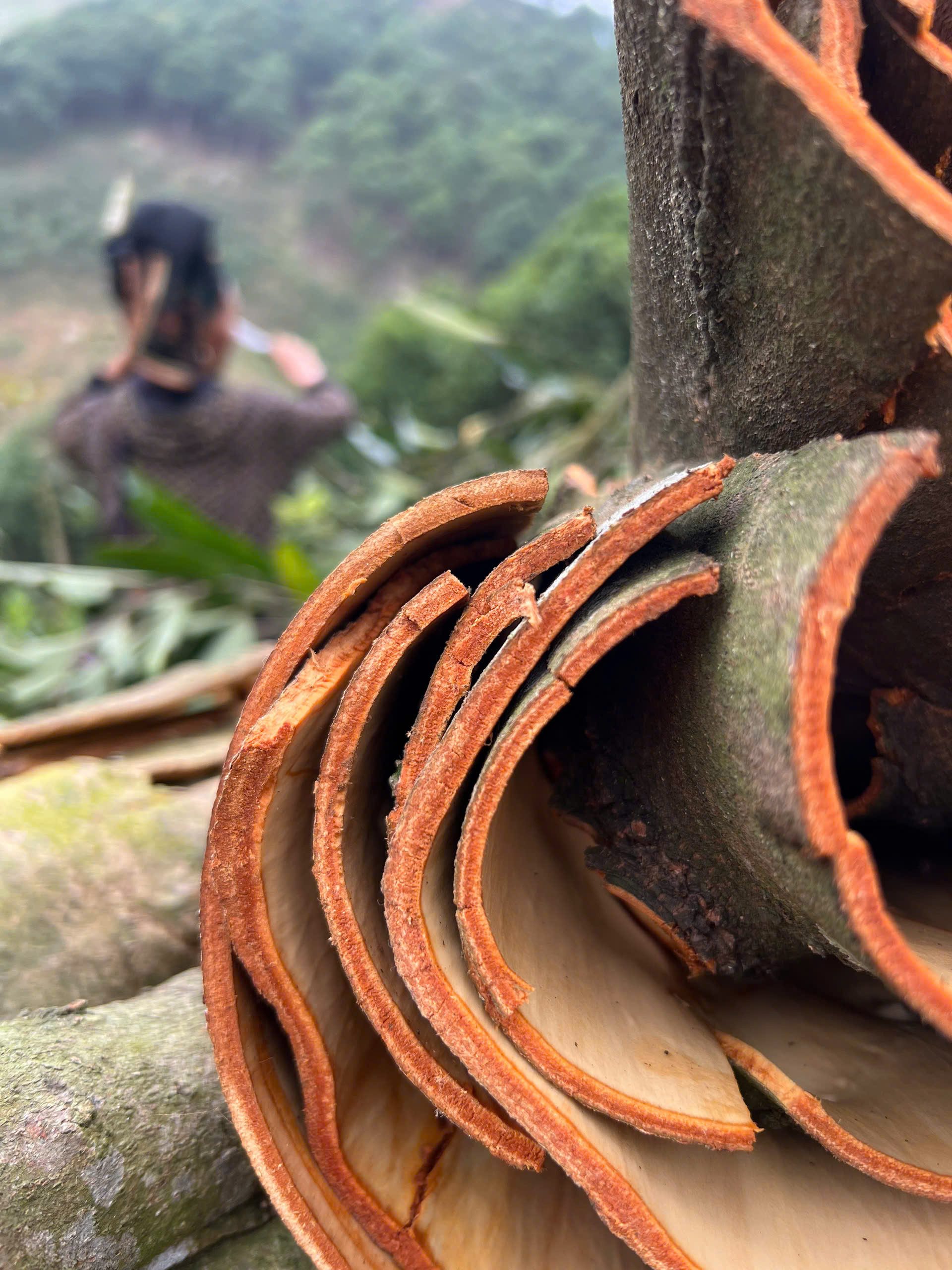
The inner bark is a dark brown or reddish-brown, intensely colored due to its high essential oil content.
-
The bark is thick (2-3mm) with a smooth, glossy surface and minimal cracks.
- Essential oil veins are clearly visible to the naked eye.
-
When lightly scraped, the inner layer reveals a golden-brown color that isn’t dull.
- Unscraped dried cinnamon bark will have a grayish-white color because it’s grown in a cold climate region.
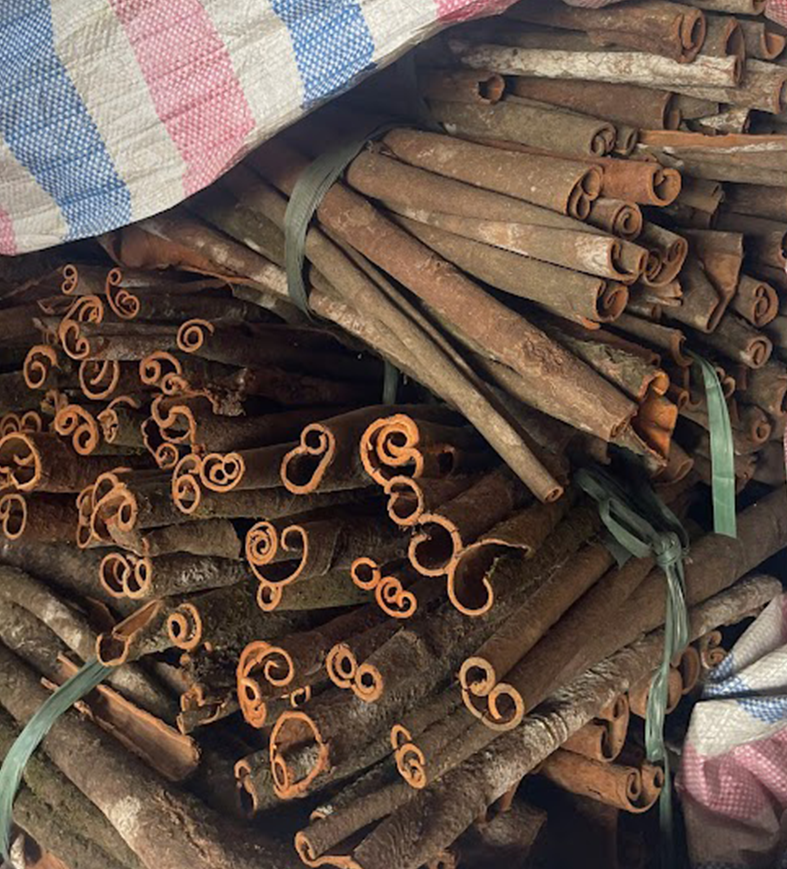
❌ Lower-Quality Cinnamon
-
The inner bark is light in color (due to low essential oil content).
- The outer bark appears green, turning light brown or pale green when dried (due to being grown in hot climates and harvested prematurely).
-
The bark is thin, brittle, and prone to many cracks.
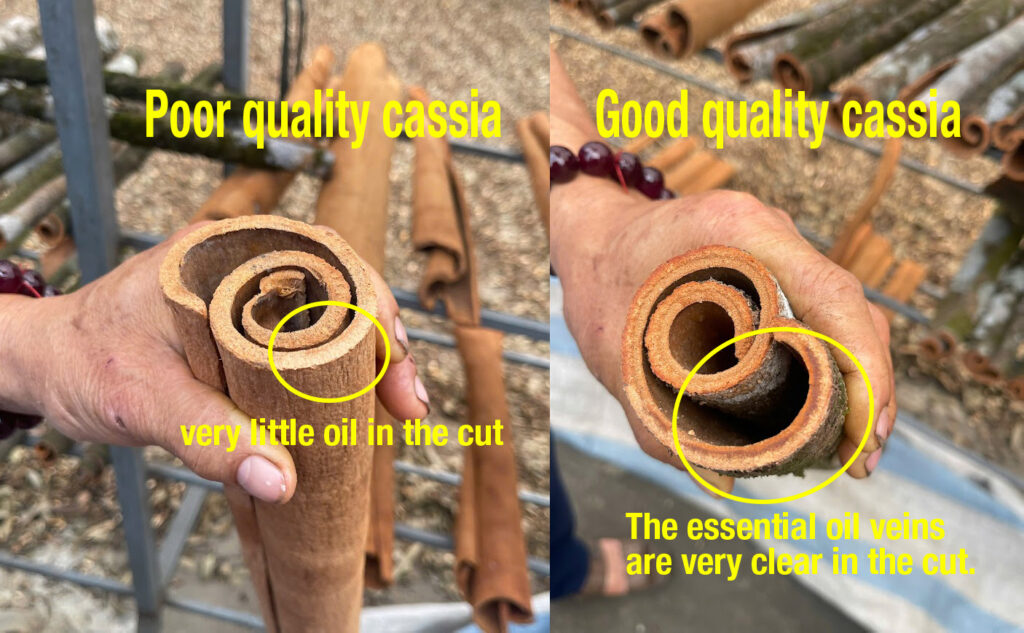
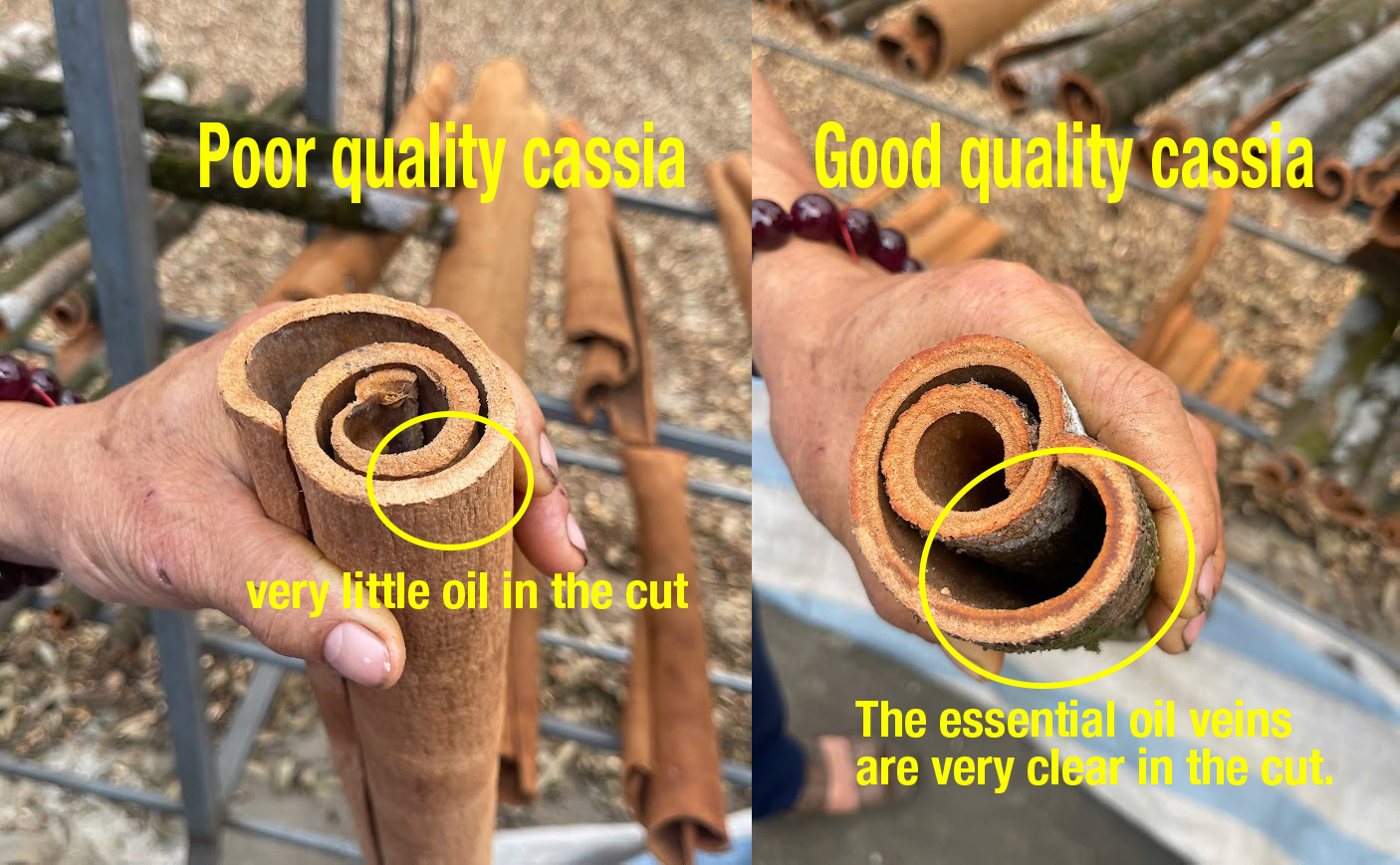
- When cut, there are very few essential oil veins visible.
❓ Why the Difference in Quality?
The variance in cinnamon quality primarily stems from environmental factors and cultivation practices:
-
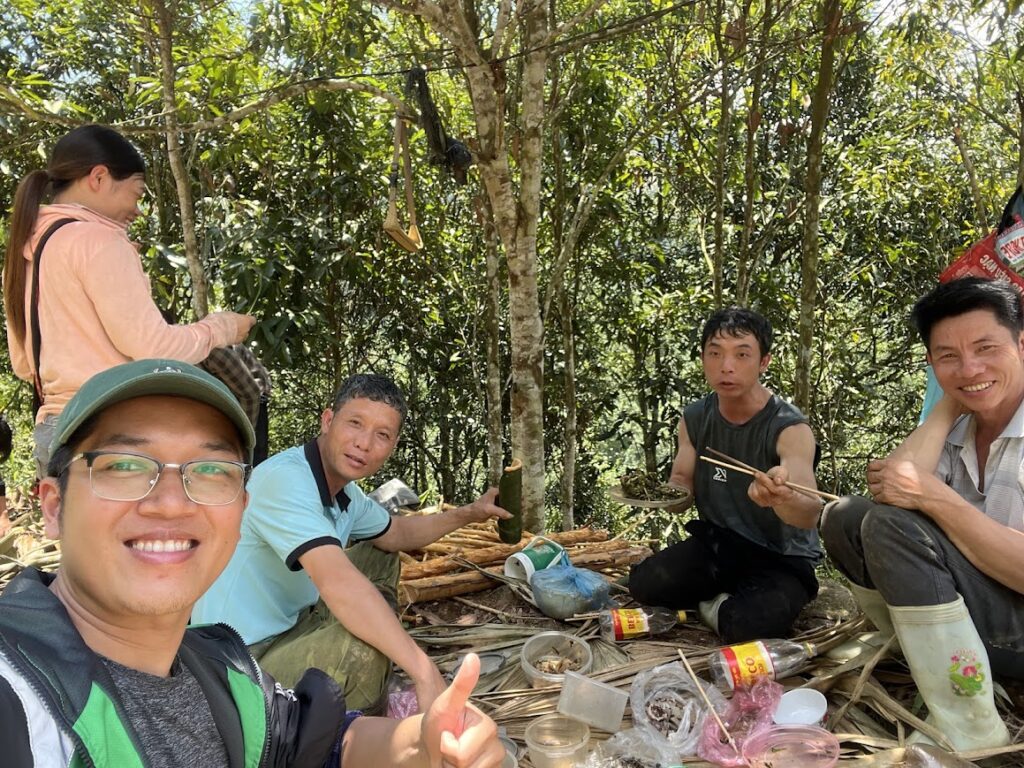
Colder Climates: In regions like Xuan Tam Commune, Van Yen District, the colder climate causes cinnamon trees to grow slower. This allows the bark to accumulate a higher concentration of essential oils.
- Warmer Climates: In contrast, areas with warmer climates (such as those outside Van Yen District, or in provinces like Lang Son, Tuyen Quang, and Lao Cai) see faster tree growth and earlier harvesting. This often results in lower essential oil content.
-
Mineral-Rich Soil: Regions with mineral-rich soil naturally produce bark with a beautiful, stable color that doesn’t fade.
- Artificial Fertilizers: Some growers use fertilizers to accelerate tree growth and enable earlier harvesting. This practice significantly reduces the essential oil content, leading to much lower quality cinnamon (e.g., in certain areas of Lang Son, Tuyen Quang, and Lao Cai provinces).
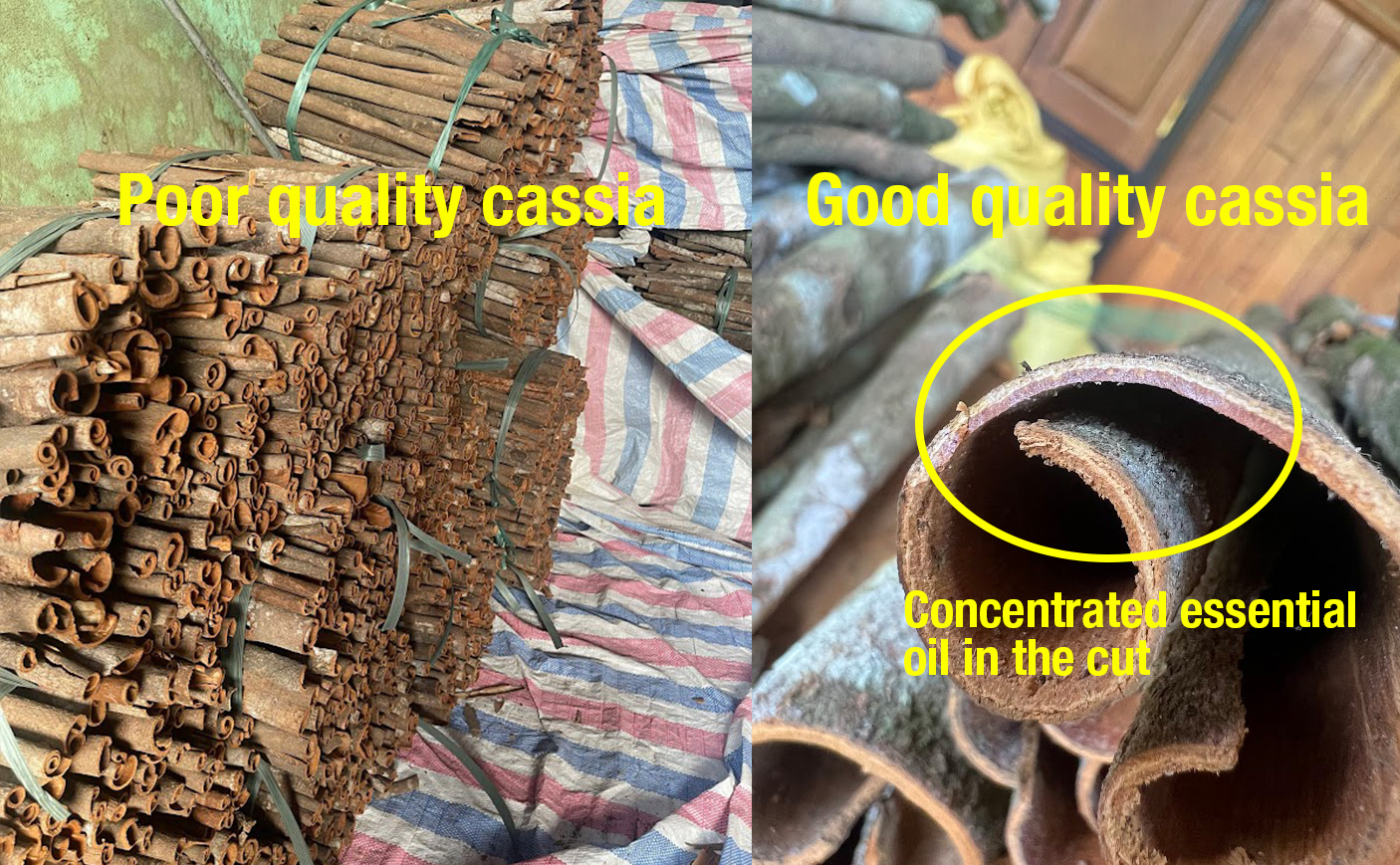
3. Sign 2: Essential Oil Quality – Instantly Identifiable
✅ How to Visually Inspect Essential Oil Quality:
- Break a piece of dried cinnamon: Good quality cinnamon will be pliable and difficult to break, indicating a high essential oil content that binds it.
- Cut across a cinnamon stick with a knife: You’ll see a clear streak of concentrated oil. The higher the quality, the more essential oil there will be, and the darker its color. (See image below)
- Submerge in hot water: High-quality cinnamon will sink due to its high essential oil density, while lower-quality cinnamon will float.
❌ Low Essential Oil Cinnamon:
-
Brittle and crumbles easily when broken.
-
No visible oil when scraped.
- When cut with a knife, the cross-section shows very little, pale-colored essential oil.
❓ The Root Cause: Why Essential Oil Content Varies?
The significant difference in essential oil quality stems from a combination of environmental factors and farming practices:
-
Climate’s Influence: Cinnamon grown in cold, high-altitude regions (like Yen Bai) accumulates a higher essential oil content (4.8-5.2%). In contrast, cinnamon from warmer, lower-altitude areas might only reach 2-3%. The slower growth in colder climates allows for greater oil accumulation.
-
Traditional Drying Methods: Natural sun-drying (or dew-drying), a traditional method, plays a crucial role in preserving the essential oil content.
- Farming Practices & Profit Motives: Unfortunately, some regions prioritize quick profits, using fertilizers and pesticides to accelerate tree growth and enable earlier harvesting. While this may seem efficient, it drastically reduces essential oil content, leading to very low-quality cinnamon (e.g., in parts of Lang Son, Tuyen Quang, and Lao Cai provinces).
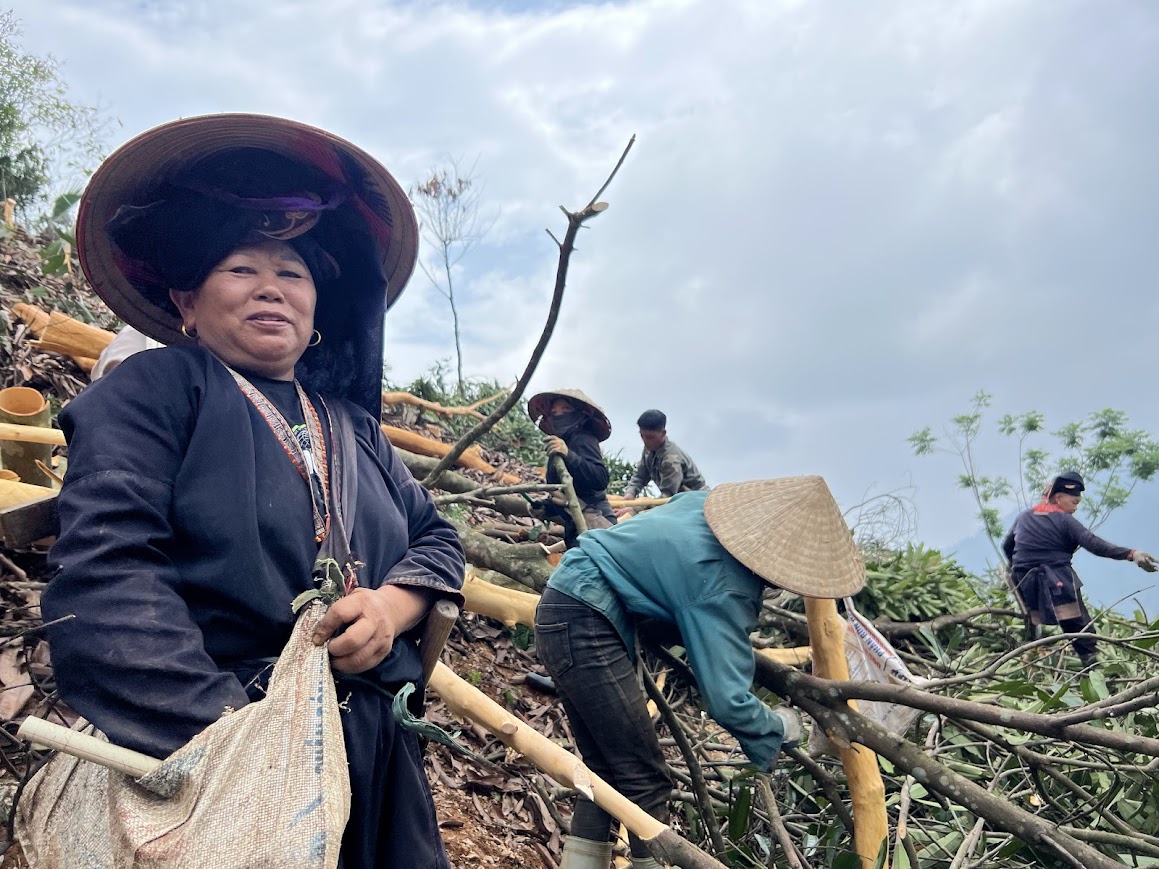
- Van Yen’s Advantage (Xuan Tam Commune): The superior quality of cinnamon from areas like Xuan Tam Commune in Van Yen District comes from local communities who practice entirely natural cultivation, without the use of fertilizers or herbicides. This dedication to natural farming, combined with our direct Farm-to-Customer export process, ensures not only very high-quality cinnamon but also a highly competitive price by delivering directly from the farm to your hands.
4. Sign 3: Flavor Profile – A Warm, Sweet, Lingering Taste
✅ High-Quality Cinnamon:
-
Intensely fragrant and sweet aroma that spreads immediately upon peeling the bark.
-
Warm, spicy flavor that isn’t harsh, leaving a pleasant, mild sweet aftertaste that lingers for 5-10 seconds.
-
When chewed, you can feel the pliant texture and rich oiliness from the essential oil.
❌ Lower-Quality Cinnamon:
-
Faint or even pungent odor due to poor storage.
-
Immediately strong and harsh spicy taste with no lingering sweetness (no aftertaste).
- When chewed, it leaves a lot of residue and a bitter, astringent aftertaste.
❓ Why the Difference in Taste?
The distinct flavor profiles of cinnamon are influenced by several factors:
-
Nutrient-Rich Soil: Cinnamon grown in nutrient-dense soil tends to develop a more fragrant and sweeter flavor.
-
Optimal Harvest Season: Cinnamon harvested at the right time (typically during the dry season) yields a richer, more intense flavor.
- Low-Quality Practices: Lower-quality cinnamon often comes from trees that were grown quickly using fertilizers. These trees are harvested prematurely, resulting in less essential oil, more fibrous residue, and an astringent, bitter aftertaste.
- Profit-Driven, Unsafe Methods: Some growers prioritize quick profits, harvesting trees as early as 3-5 years old, and even using herbicides. This not only compromises the cinnamon’s quality but also poses significant health risks to consumers.
5. Why Cinnamon quality varies by region, even within the same variety
Even with the same plant variety, 3 key factors determine cinnamon quality:
1️⃣ Climate: Colder regions (like Van Yen) allow cinnamon to accumulate more essential oils, leading to richer quality.
2️⃣ Soil Conditions: Ancient alluvial soil and pure water sources contribute to a more intense and complex flavor.
3️⃣ Cultivation Methods: Naturally grown cinnamon, free from chemical fertilizers and pesticides, yields superior aroma and taste. In contrast, other cinnamon-growing areas, driven by profit, use herbicides and chemical fertilizers to accelerate growth and early harvesting. This severely compromises quality, resulting in inferior cinnamon.
6. Conclusion & Recommendations
To avoid purchasing lower-quality cinnamon:
✅ Choose cinnamon with a dark inner bark and a grayish-white outer surface.
✅ Test by breaking or cutting a cinnamon stick to check for essential oil.
✅ Taste the cinnamon to experience its characteristic flavor.
Get in touch with us now to unlock unbeatable factory-direct prices and exclusive special deals
- Where to buy reliable export cinnamon? 5 reasons to choose a direct supplier from Viet Nam
- From the Cinnamon Mountains of Yen Bai to the World: A Journey of Purity, Trust, and Impact
- Are You Paying Premium Prices for Low-Quality Cinnamon? How Importers Can Save Hundreds of Thousands Annually
- The secret behind Yen Bai cinnamon’s exceptionally high essential oil content and distinctive flavor
- Don’t buy the wrong cinnamon! Here are 3 ways to tell if it’s good quality